Storage Bed Clearance: Will It Fit? How to Measure
A storage bed takes up the same floor space as a standard bed in the same size. The footprint is rarely what catches people out.
It’s only when the bed has been set up, and the bedroom feels complete, that comes the moment of truth: you pull the drawer open and it bumps into the bedside table. Or you lift the base and realise the ceiling light is suddenly in the way.
The problem was never the bed fitting. It was the bed working.
A storage bed needs more than enough space to sit in your room. It needs room to open, move, and make your everyday life easier. Knowing the right storage bed clearance before buying can be the difference between a piece that quietly solves your storage problems and one that creates new ones.
Storage bed clearance: The measurement people forget
Storage bed clearance is the extra space your bed needs to open, move, and function comfortably. Most people measure the floor space and stop there, but that tells you whether the bed will fit, but not whether it’ll open properly. And the space it needs to open is the storage bed clearance that usually gets skipped.
Which measurement you need depends on the type of storage bed you’re choosing:
Lift-up storage beds
These beds use a hydraulic or gas-lift mechanism to raise the mattress platform, giving you access to the full storage compartment underneath. You’ll need to check vertical clearance above the bed, including:
Ceiling height
Pendant lights
Wall shelves
Window ledges
A lift-up bed may fit perfectly on the floor, but if the top can’t open fully, it just becomes a box with a stubborn lid.
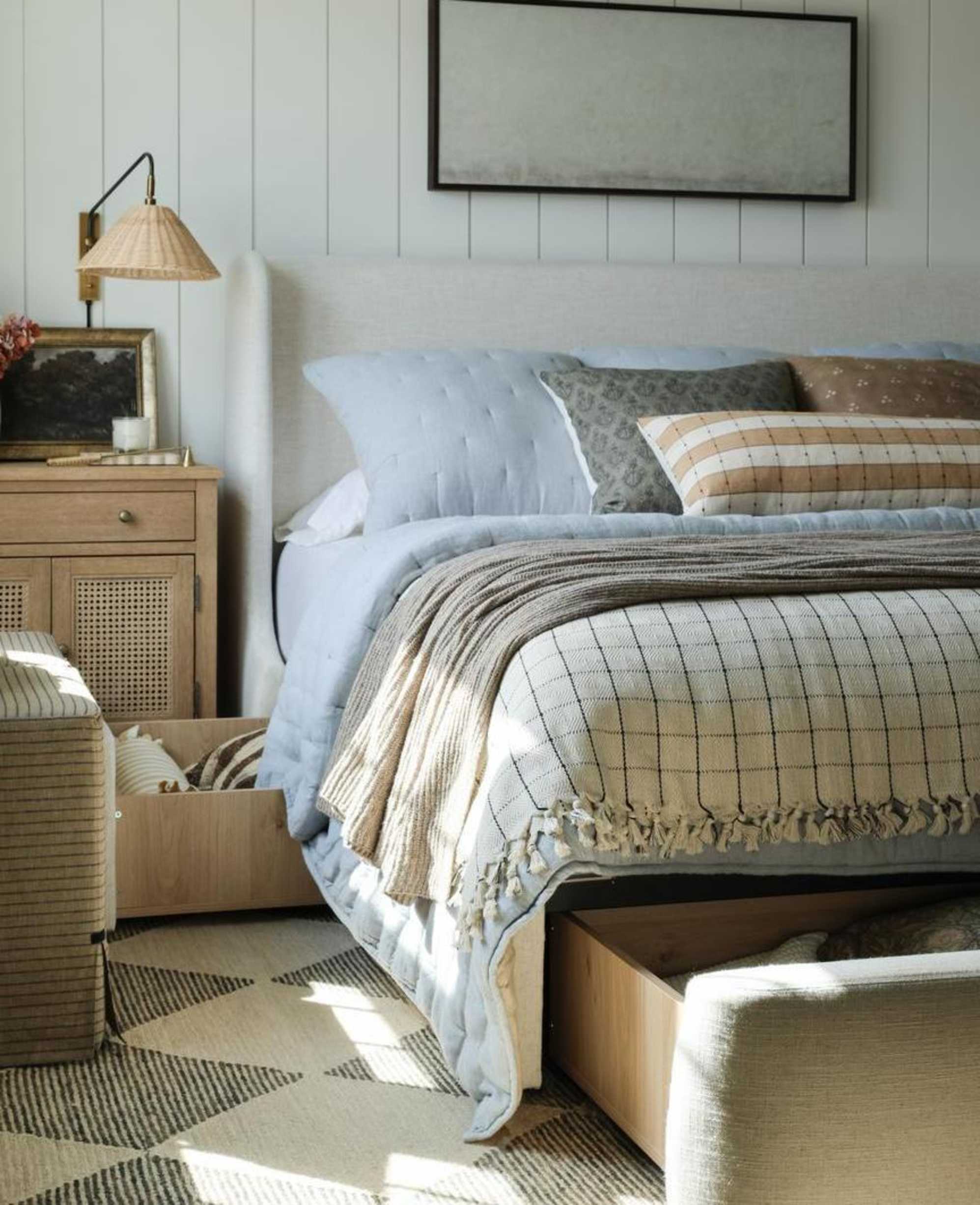
The Esmee Performance Fabric Storage Bed
Picture credits: @heybellaking
The Esmee Performance Fabric Storage Bed
Picture credits: @heybellaking
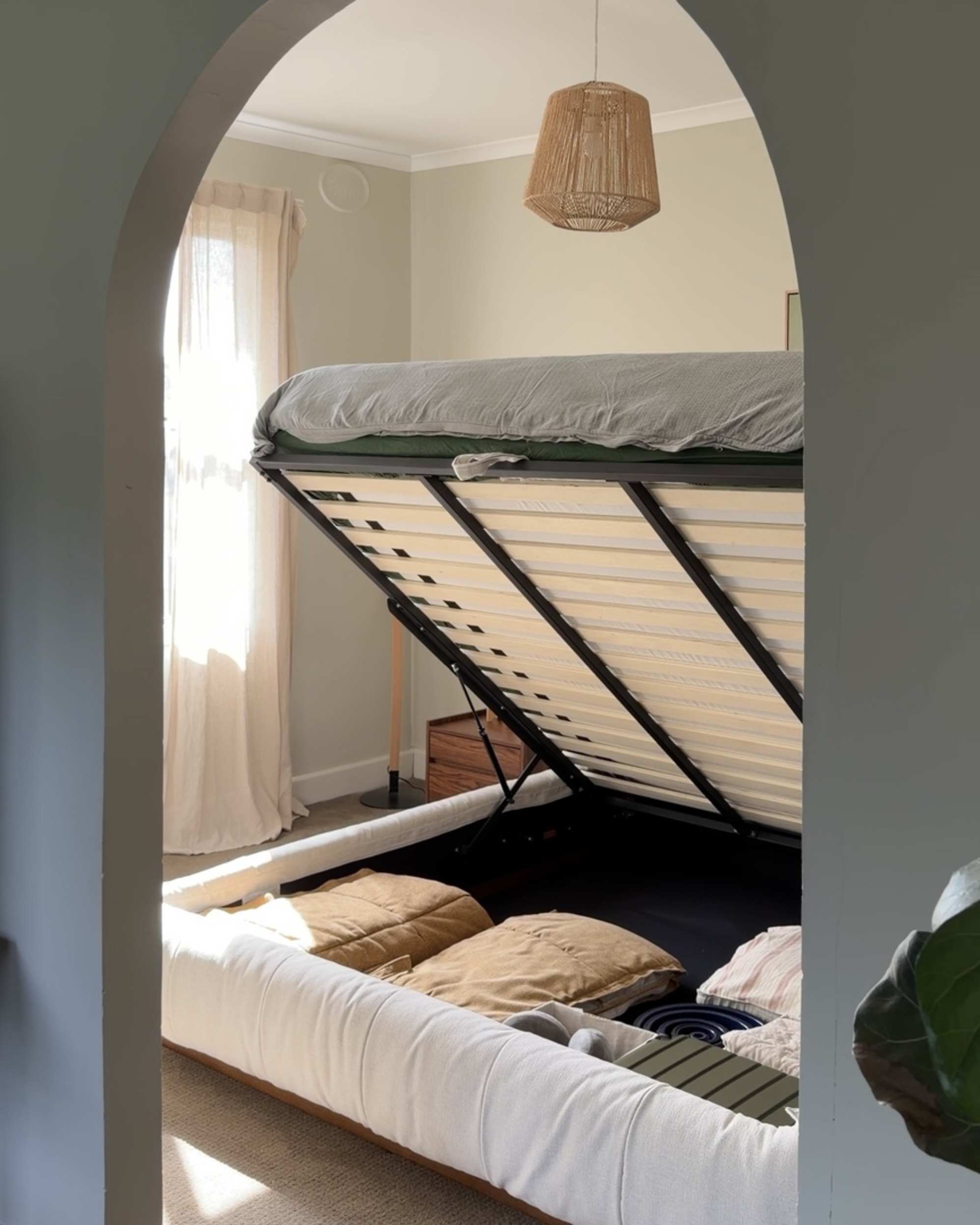
The Auburn Wood Storage Bed
Picture credits: @conaghkathleen
The Auburn Wood Storage Bed
Picture credits: @conaghkathleen

Drawer storage beds
Drawer beds require horizontal clearance because the storage compartments pull out from the side or foot of the bed. If you’re wondering how much space for bed drawers you need, measure:
The depth of the drawer when fully extended
The standing space needed to comfortably access it
Any nearby furniture that could block the opening
The goal is simple: you should be able to open the drawer fully without having to move another piece of furniture first.
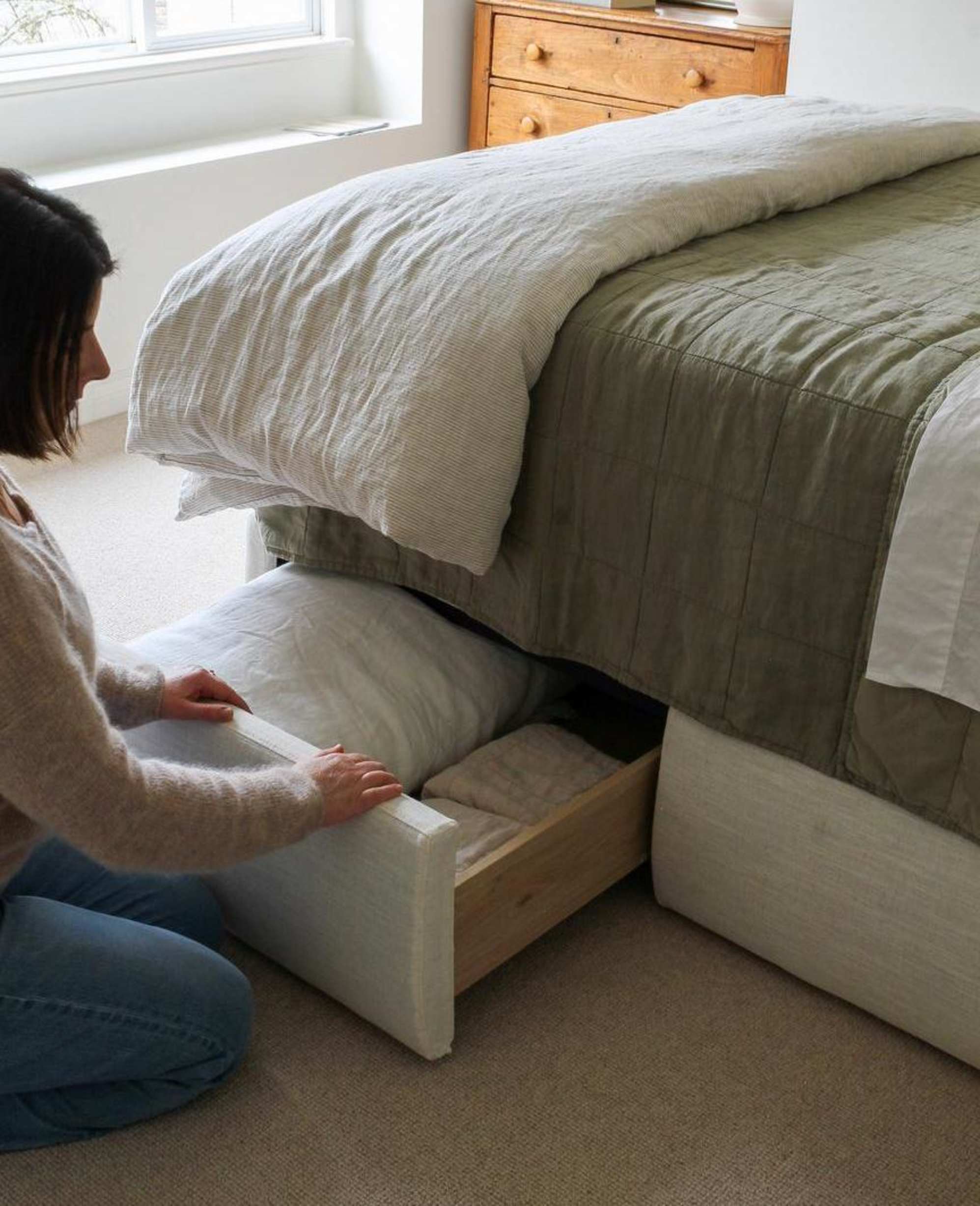
The Dalton Storage Bed
Picture credits: @ellisandhale
The Dalton Storage Bed
Picture credits: @ellisandhale
How to measure your room for a storage bed
Getting the right measurements is less about finding out whether a bed fits and more about understanding how the entire room will work around it.
1. Measure the bed frame dimensions
Start by measuring your available floor space and compare it against the full dimensions of the bed frame. Remember, the bed size is only part of the equation. The headboard, frame thickness, and storage mechanism can add extra width and length.
Common bed sizes include:
| Bed size | Mattress dimensions | Best suited for |
|---|---|---|
| Single | 96 cm x 190 cm | Smaller bedrooms, guest rooms, solo sleepers |
| Super Single | 134 cm x 190 cm | Single sleepers who like to stretch out |
| Queen | 153 cm x 203 cm | Couples and most standard bedrooms |
| King | 193 cm x 203 cm | Larger bedrooms with more space to spare |
2. Check the minimum space between bed and wall
The minimum space between bed and wall depends on how you use your bedroom and where your storage opens.
For drawer storage beds, you’ll need additional clearance on the drawer-opening side to access the storage without squeezing sideways. Can you still open your wardrobe doors with the drawers extended? Can you reach into the drawers without moving furniture around?
The storage bed should support your habits, not make you negotiate with your furniture every morning.
3. Account for other furniture around the bed
A common mistake is measuring the bed area alone and forgetting everything else in the room. Before finalising your bedroom layout, consider:
Wardrobes
Windows
Doors and walkways
The best bedroom layouts create breathing room. The bed should feel like the centrepiece, not the thing you have to squeeze around.
What a good fit actually feels like
The best storage bed does more than save space. It makes your bedroom easier to live in. Before buying a storage bed, measure the bed footprint, check the required storage bed clearance, and think about how the bed will work with the rest of your room.
Because when the measurements are right, you don’t just get a bed that fit—you get a bedroom that finally feels like it was designed around you.

Frequently asked questions about storage bed clearance
How much clearance should be around a bed?
Aim for 45 to 60 cm of walking space on any side you use to get in and out, and 75 cm or more where two people pass or where a drawer pulls out. A bed can sit tight against one wall, as long as no storage opens on that side.
What’s the average clearance under a bed?
Most standard beds give 30 to 45 cm of clearance underneath, so around 38 cm is a fair average. A storage bed puts that gap to work instead of leaving it empty: drawers fill it with divided compartments, while a lift-up base opens the entire area under the mattress into one deep cavity.
How much clearance between bed and wall?
Keep a minimum space between bed and wall of 45 to 60 cm on any side you walk along or open storage from. You can run the bed flush to a wall on a side you never use, but leave the drawer sides clear so nothing stops them opening fully.
